There's so much to be grateful for. Lots of great memories. Thank you so much everyone!


There's so much to be grateful for. Lots of great memories. Thank you so much everyone!

If you are walking along the Wet Dyke trail, try to find these gorgeous rose hips. They are huge! Inspired by seasonal apples and rose hips, I shared a warming and nourishing apple cider recipe that doesn't require special equipment. It's easy to make and you can spice it up any way you like.
Simmered Apple Cider
Madame Beespeaker
Apples: 1 bag
Rose hips: 1 handful wrapped in a tea bag made of gauze
Citrus: 1 lime
Sweetener: Maple syrup to taste
Spices: grated Ginger and turmeric, chai spice blend and/or dried dragonhead and lemon verbena
Core the apples and chop up the lime, cover with water in a large pot.
Add the rose hips in a tea bag made of gauze, ginger, turmeric and chai spices.
Simmer for two hours, or until apples are soft. Take out the rosehip tea bag.
Mash the apples against the side of the pot and simmer ten minutes or more.
Strain and clean out the pot—put plant material in compost. Put the cider in the pot—taste and sweeten. Reheat and serve warm.

Lori Snyder picked some examples of plants growing in and around our garden plot and talked about their medicinal properties. She also shared two of her favourite resources:
The Boreal Herbal by Beverly Gray and the Wild Wisdom of Weeds by Katrina Blair.

Lori talked about Calendula, dandelion, yarrow, nasturtium, borage, plantain, and horsetail. She called us to help grow corridors of Indigenous food and medicinal plants throughout our urban spaces.

It's always a pleasure to hear Lori Snyder talk about her passion for plants!

Lori and I also shared our tips for making salves from plants we grew in our garden plots. It has been a pleasure to work with her during this residency and the many years we've been teaching together.

Calendula was still blooming brightly at the garden. The flower heads are infused in olive oil for 2-3 weeks. The oil itself is a wonderful treat for your skin, especially since we are washing our hands so often these days. Adding wax to the oil makes it into a salve or balm--a wonderful self care treat.

And of course, bees love calendula too!

Here's what it looks like when the dried flower heads are infusing into the oil.


Calendula or Yarrow Salve
1 c calendula or yarrow oil
2 tbs candelilla wax
2 tbs shea butter
essential oil (optional)
To create the calendula oil, first gather the heads of the calendula flowers later in the day when they are not moist with dew. Dry them on screens stretched across frames in a well ventilated room out of direct sunlight. Once the flower heads are “crunchy” they are ready to use. When making yarrow oil, it’s the same process, but you can use the stems, leaves and flowers.
Stuff the plant material into a clean jar and fill with olive oil. Let it infuse for 2-3 weeks. Every three days tip the jar to mix the plant material with the oil.
Gently heat 1 cup of the oil in a double boiler, adding the butter and wax. Simmer for a few minutes just until all the wax is melted. Add essential oils, pour into jars until firm.

I have been making kombucha all through this residency and lately I've been adding fruit to the secondary fermentation. I picked the same variety of small cherries (Prunus serotina) that Jenn Pearson used to make ink and put them through a sieve to extract the juice. Adding this to kombucha makes it extra tasty and nutritious.
Kombucha
2 tsp black or green tea leaves
water that has the chlorine take out of it with a charcoal filter or charcoal stick (kishu bunchotan)
2 tbs cane sugar —NOT honey
1 scoby (try to source one from a friend)
pint jar (holds 2 cups)
tea pot
Boil the water and make the tea in your pot. Let sit until room temperature. Pour into the jar and add the sugar. Stir until mixed. Add the scoby. Cover the jar with a clean cloth and let sit for three or four days until it forms bubbles around the scoby. Taste and see if it is at you desired sweetness. I like it quite sour, almost vinegar. Refrigerate and enjoy!

Crystal Lee and I shared our recipes for quick refrigerator pickles and encouraged the audience to be creative and mix and match different shapes, sizes and colours of the vegetables available at this time of the year.

Carrots, beets, peppers, chayote, daikon, and cucumbers of varying shapes and sizes make for some pretty pickles to make meals more colourful and nutritious.
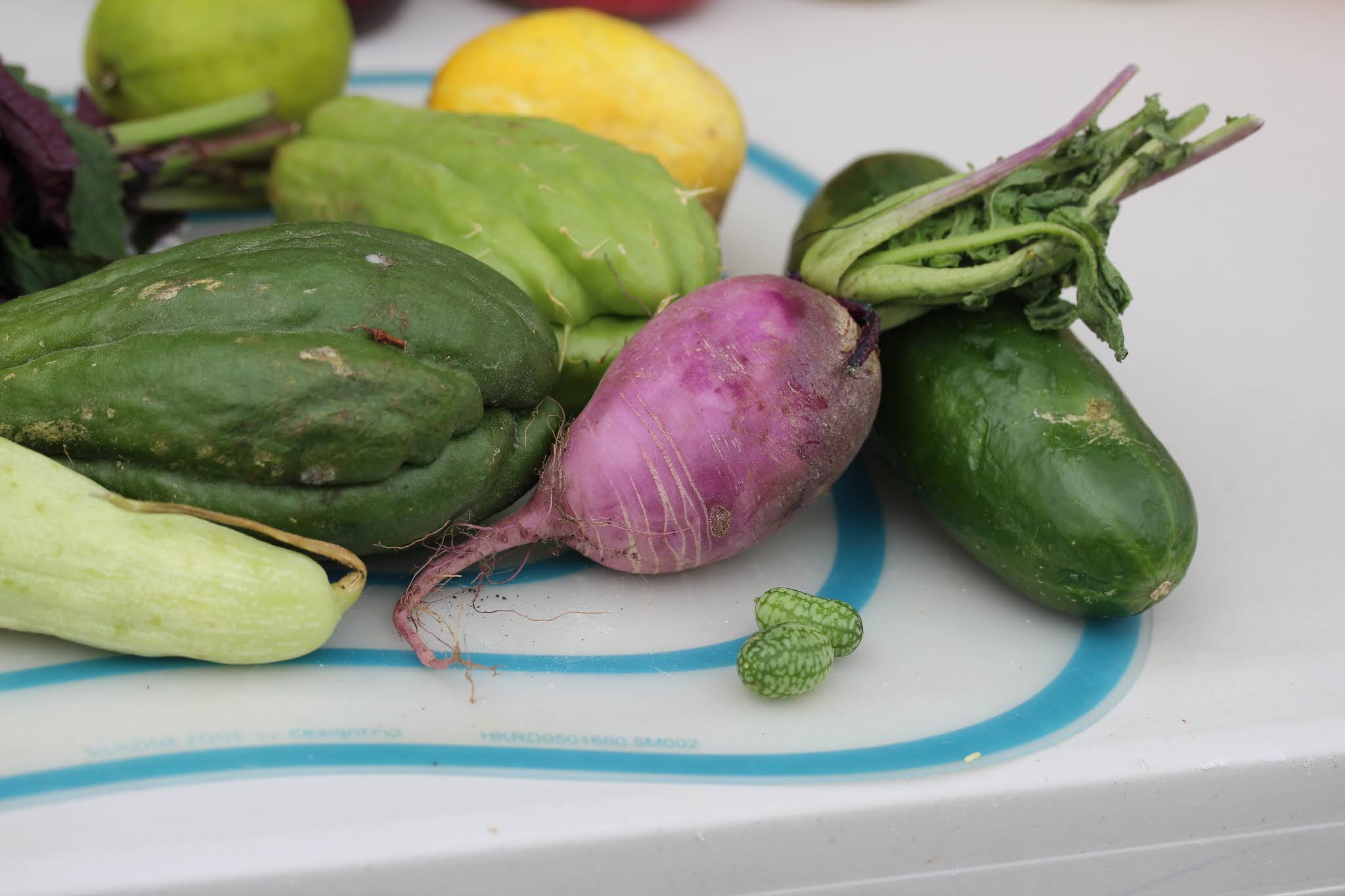
This year I tucked cucamelon seeds in with my tomato pots and the vines climbed up the tomato cages and produced the tiny cucumbers that look like miniature watermelons. Crystal described a giant heirloom cucumber she recieved via Bunz (a grassroots barter system ). Can you spot the lemon cucumber and the Armenian cuke?

I bought the chayote from Fresh Roots at the Riley Park Farmer's market, They are experimenting with growing both smooth and prickly varieties.

Don't forget to use the greens from your daikon radishes! They can be added to stir fries or soups.

What a lovely day and a superb location for a workshop!


Crystal shared three recipes that she uses to make pickles:
Quick Pickled Cucumbers
· https://www.blessthismessplease.com/quick-pickled-cucumbers/
Vietnamese Pickled Carrots and Daikon
https://whiteonricecouple.com/recipes/vietnamese-pickled-carrots-daikon/
Lotus Root Salad
https://www.storyofakitchen.com/salad-recipes/lotus-root-salad-recipe/

Meanwhile, I prepared the spicy simmered apple cider:
Ingredients:
1 bag apples
1 handful rose hips wrapped in a tea bag made of gauze
1 lime
Maple syrup to taste
1 tbs grated ginger
2 tsp grated turmeric
1 tbs chai spice
Core the apples and chop up the lime, cover with water in a large pot.
Add the rose hips in a tea bag made of gauze, ginger, turmeric and chai spices.
Simmer for two hours, or until apples are soft. Take out the rosehip tea bag.
Mash the apples against the side of the pot and simmer ten minutes or more.
Strain and clean out the pot—put plant material in compost. Put the cider in the pot—taste and sweeten. Reheat and serve warm.

Crystal Created a beautiful seasonal display and showed how to make an elegant lantern from the pomelo fruit (the largest fruit on the tray). How many items can you name in this display? She recommends checking out this resource on Chinese Mid Autumn Festival traditions:
https://thewoksoflife.com/mid-autumn-festival-foods/

I shared a couple of my pickle recipes and also made cookies and rustic fruit tarts. A cold little bumble bee checked out our pickling veggies!

Beespeaker Bahn Mi Pickles
1 cup carrots
1 cup Daikon
1/2 cup apple cider vinegar (I used some infused with horsetail)
1/2 cup rice vinegar
1 cup water
1/4 cup sugar
1 tsp salt
These pickles can be used in Vietnamese-style submarine sandwiches, or as a garnish for other meals.
I like to use them in Okonomiyaki—style pancakes. They must be kept in the refrigerator.
Step 1: Sterilize jars and lids and put them on a pan or tray.
Step 2: Wash and grate carrots and daikon. You can use a grater or vegetable peeler. I used a “spiralizer”.
Step 3: Fill the jars with the veggies.
Step 4: Put the remaining ingredients in a saucepan and bring it to a boil.
Step 5: Pour the solution into the jars, covering the vegetables.
Step 6: Let the jars cool. Put on the lids and refrigerate at least 48 hours before using. (Lasts up to 3 weeks in the fridge.)

Chayote and Daikon Pickled with Shiso
1/4 cup sugar
1/2 cup apple cider vinegar infused with currant blossoms
3 tablespoons ume plum vinegar
1 tbs seaweed, chopped finely
1 chayote, cubed
1 daikon cubed
7 shiso leaves, chopped
Put sugar, vinegar, and salt into a bowl and stir until the sugar and salt are dissolved.
Add chayote, daikon, and shiso to the marinade and stir. Put into jars and refrigerate overnight.

Brown Sugar Walnut Sesame Seaweed Cookies
by Madame Beespeaker
3/4 c AP flour
1 1/4 cup spelt flour
¼ cup toasted sesame seeds
1 cup unsalted butter, softened
½ c brown sugar
1/8 cup ground nori
2 rounded TBS ground flax
1-2 tsp fennel seeds
½ cup coarsely chopped walnuts
½ tsp salt to taste or top with a few grains of “fancy salt”*
Cream butter, sugar and salt. Add flours, sesame seeds, walnuts flax, and fennel. Use your hands to combine ingredients and form a pliable dough. Divide the dough in half and roll each into a long with the desired size of cookie. Wrap in parchment paper and refrigerate for a few minutes until the dough is solid enough to slice. Slice into rounds about 3/4 cm thick. Place on pan. If you are using fancy salt, put a few grains on top of each cookie. Bake at 375 for 8-10 min until firm and browned on the bottom.
Makes about 24 cookies. These are actually nice as a cracker with a bit of blue cheese on top.

These are the ground cherries we grew at the farm. After removing the husks they kind of look like yellow cherry tomatoes.

Coronation grapes are so lovely at this time of the year, I mixed the grapes with the ground cherries in a seasonal rustic tart. Adding fennel seeds from the garden really boosts the flavour.

Concord Grape and Fennel Rustic Tart
by Madame Beespeaker
Pastry
½ cup spelt flour
1/8 cup plus ½ cup unbleached all purpose flour
1/3 tsp salt
½ c butter cut into small cubes
¼ cup cold water.
Filling
About 1.5 c grapes and or ground cherries
½ tsp fennel seeds or more
1 tbs flour
2 tsp sugar
Prepare the fruit: pull grapes off the stems and dehusk the ground cherries
Mix flours together with the salt.
Use your fingers or a pastry cutter to blend the butter with the flour until it makes pea sized pieces.
Add the cold water and knead the dough until the ingredients are combined and hold together.
Divide the dough into four pieces and roll each piece into a rough circle.
Put 1 tsp flour onto the rolled circle and sprinkle lightly with sugar and fennel seeds.
Place the fruit onto the dough and then crimp the sides up to hold in the fruit and keep the juice from leaking.
Bake at 375 Degrees F for about 25-30 minutes, or until fruit is bubbling and the crust is lightly browned.
Cool and serve with ice cream, whipped cream or on its own.
Feel free to e-mail Lori with your own seasonal recipes: beespeaker (at) gmail (dot) com

