Pages

Showing posts with label phenology spring bee plants. Show all posts

Wednesday, May 6, 2020

You're Invited!!!


We hope you can join us virtually on May 19 at 7pm. Four gardeners from the Victory Gardens for Diversity artist residency at Terra Nova Rural Park talk about the intimate ways gardens have shaped their lives. Lori Snyder, Catherine Shapiro, Lois Klassen and Lori Weidenhammer will talk about gardens in their past that have inspired them, how their present gardens are being informed by the COVID-19 pandemic and share their dreams for gardens of the future. To register, email eyon@richmond.ca .

Garden Update!


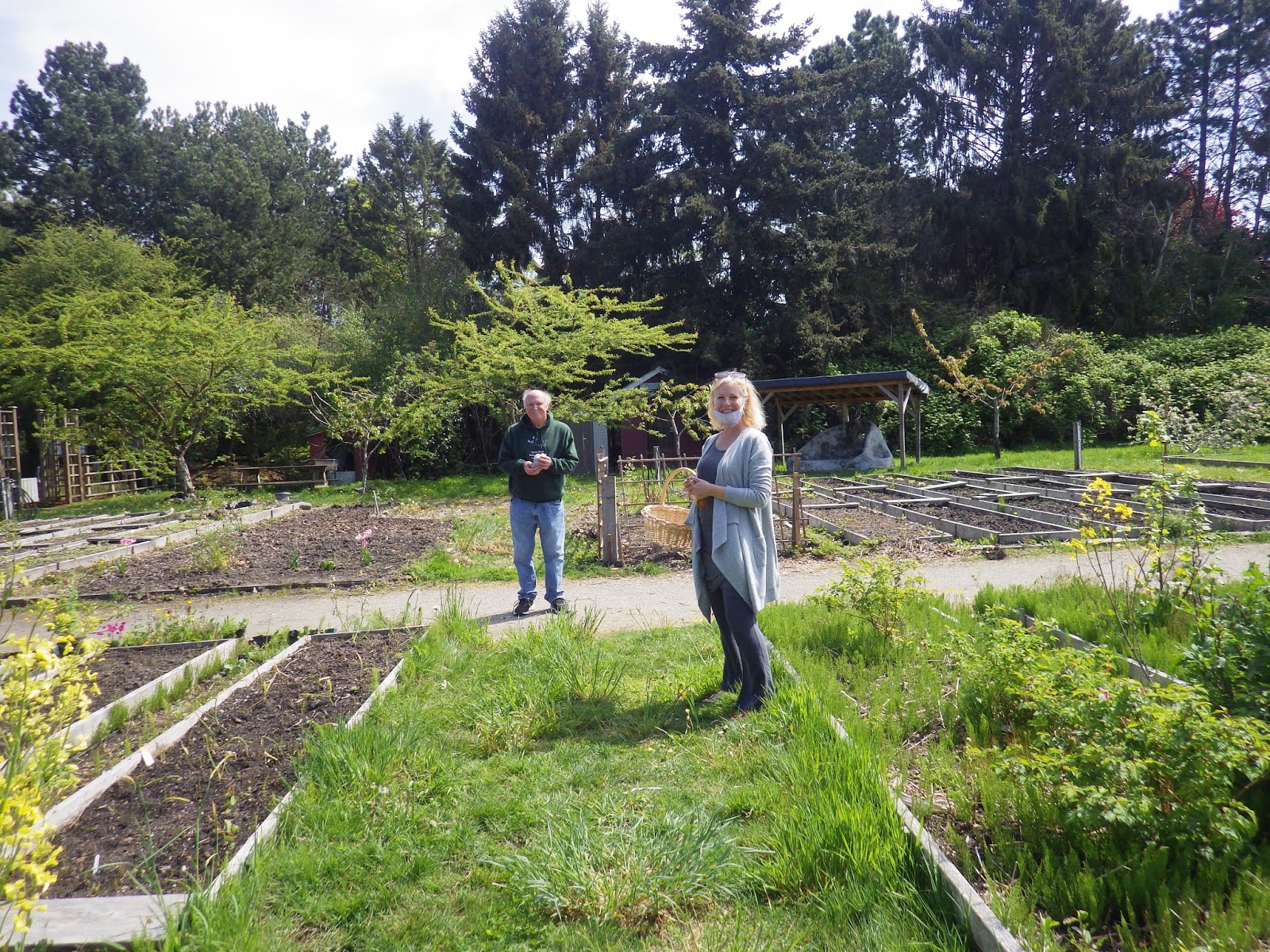
Such a beautiful day to do some socially distanced gardening at Terra Nova! Lots of chive buds just waiting to pop open and welcome the bees into their fragrant florets.


We arrived to see the kale and blueberry flowers blooming their hearts out. No bees in the blubes, but the kale flowers were humming with honeybees from the nearby hives.


And we found the horsetail has proliferated in the gardens. Le sigh. Lots of work to do.


We've left the beds with the vetch cover crop as bee food. They'll make the soil nitrogen rich for planting winter vegetables in the fall.


So lovely to see this cover crop (crimson clover) already in bloom. It's lovely mixed with Phacelia tanacetifolia.


Jenn and I got to work weeding out the morning glory and horsetail. That bindweed has roots that travel quickly and break easily. Leaving any part of root in the ground means it will just regenerate. A losing battle, really. The beds need to be raised to a higher level to deal with this problem.


We planted peas marigolds, calendula, and some radicchio.


Luckily, we have a wonderful volunteer "Mr. B" who is weeding and watering the garden. Thanks so much for the Nature School at Terra Nova for "lending" him to us! I gave him some homemade scones as a gift and he said he'd been baking too. He makes orange cranberry muffins, but has run out of cranberries. Kate, from the Nature School went home and got some out of her freezer for him. They did a safe exchange using that nice big basket.  Love these gestures of kindness!  We must get Barrie's recipe!


 We also added our David Suzuki Butterfly plants including kinnikinnik, goldenrod, sea thrift, camas and more! So exciting to finally get them in the ground. Once established, they should be able to compete with those troublesome weeds.


Jenn and I went for a stroll and lo and behold we saw a California tortoiseshell butterfly!!!!!
 

There were lots of hawks and crows chasing each other and songbirds galore, including this bring yellow sweetie!


Willows are going to seed. That fluff is perfect for nesting birds!


 These willow catkins are amazing!


It's so wonderful to see the trees and the shrubs leafing out. These willow leaves are soft and silvery.


And these silver cinquefoil leaves reflect the light beautifully.


Elderberry and crab apples are in full bloom.


May is such a lovely time to garden. Even if it's putting a few seeds in a yogurt pot on your windowsill, I hope you can grow something to witness the thrill of watching it transform and bring forth the miracle of life.

Sunday, April 19, 2020

Bees to Meet You!

There are a few species of bees you may see in the Lower Mainland right now. I'm posting some photos of my recent sightings. Can you find these bees?


 This beautiful shaggy bumblebee is Bombus mixtus. The red on its thorax is at the very tip, which helps to identify its species.


This is the yellow-headed bumble bee (Bombus vosnesenskii), the most common bumble you'll see in the Lower Mainland. When you are taking photos of bees see if you can get a photo of their face, back, and side, especially that back leg. This will help to determine if the back leg has pollen baskets, which would make it a female bee.


 This one is  Bombus flavidus. See how long and narrow her "chin" is? She also has orange on her abdomen. At this time of the year you'll see queens and some workers, but usually not any males yet.


This is a female blue orchard mason bee. Most of the males have mated and departed, but these ladies are pollinating the cherry trees and will soon be ensuring a good crop of apples in our city fruit trees.


These blue orchard bees have hair bellies to carry their pollen, but as you can see, they do also carry a bit of pollen on their butt!


This beautiful golden bee is an Andrena mining bee.


Here's another species of Andrena, much darker and a bit larger than a honey bee.

After the females emerge and mate and start laying eggs in their nests, you will start to see cuckoo bees trying to sneak in the holes to go down the tunnel and lay their eggs. This happens at the hottest time of the day when the females leave the nest to forage for pollen.


This is a Sphecodes cuckoo bee with a blood red abdomen.You'll see her skulking around the nests of true bees.


This is a Nomada cuckoo bee, which even has red eyes.

There are also insects that mimic bees: the wannabees.


This is a hoverfly, flower fly syrphid fly that drinks nectar and it's larvae eat aphids.


This furry critter is a bee fly (Bombiliidae). Their larvae prey on bees, wasps and beetles.

These are a few of the bees and wannabees you might see in the Lower Mainland during Earth Week. If you take a photo, crop it in to show as much detail of the insect as you can and then post it to iNaturalist sharing details about what the insect was doing and whether it was on a particular plant.  If the insect can be identified by an expert, it may be a useful scientific observation. These kinds of observations can help us build better habitat for our pollinators and other garden helpers.


Thursday, April 2, 2020

Hummingbirds and Spring Bees


Last night I dreamt a hummingbird hovered to close to my face she was a blurr. She landed on my hand and I felt the lightness of her, and her soft wings. In many cultures, hummingbirds are sacred, carrying messages of hope and solace, a symbol of resilient beauty.

This reminded me of an experience I had 17 years ago which inspired me to write the poem below. I'm surprised at how relevant it is to me today.


a hummingbird in the house


Patiently, she waited for me
on the windowsill of the cabin,
breathing lightly,
as if this moment had been destined to happen
for a long time.

waiting is lost time

She had tried to fly through the windows that look onto Storm Bay.

when will this be over?

My instinct was simply to pick her up and let her go,
and so I did.
We entered this lost time together.
She flew away instantly,
the bird that is a ghost,
halfway in this world and yet of the next.

waiting is wasted time

I looked anxiously at the Dharma clock.

we wait
we pray
we sing
and then we fly through an open door


LDW July13/03, for H


Hummingbirds also remind me of my friend Donna Lewis, who had a real affinity for them. I called her my sweet hummingbird.


And here's my first attempts at videoing the bees that inspire me so much. Bit of a learning curve, but it's coming!


Here's my first attempt at a video of a bumble bee queen in the White Icicle currant bush.


Here's a worker bumble bee in lungwort.

Monday, March 30, 2020

Finding Your Happy Place


It’s so important in a time of crisis to find a space that inspires you and helps you feel inspired, but also safe. Those of us who don’t own cars need to find our happy place within walking distance from home. I love going on walks in nature, but often rely on the bus to get me out to where I want to go. The quarantine has made me find places close to home that fill me with delight and help me to get away from all the worry and grief. I’ve written about searching for signs of spring and how the red flowering currant is a particular sensory delight. I’ve mapped out the currant bushes in my neighbourhood and challenge myself to make a circuit of them on a daily basis to get some exercise and keep my spirits up.

I’ve also started doing some of the yoga and basic training exercises missing from my schedule. I chose a place with benches where I can see a blooming currant bush and watch the hummingbirds flit to it while I do push-ups and squats. The bush functions as my personal coach, silently glowing in the sunlight and shifting in the breeze as I find the joy in moving my body and testing my flexibility and strength. The hummingbirds are bold enough not to bother with me as I do my repetitions. I notice tiny weeds blooming and other little details as I move through the space over and over again. 
 
What about you? Have you been walking around your neighbourhood or even your back yard to look for signs of spring? Do you like to have a destination or do you just choose a general direction and wander? I like to do a bit of both. I usually choose some bee habitat hot spots to head towards. This week I’ve found two bee rich destinations: a huge white icicle currant at the top of Queen Elizabeth Park and the pussywillows at the duck pond in the same park.


I've been watching the television series called The Durrells, which is based on the autobiographical books by naturalist Gerald Durrell. There's a lovely episode where twelve year old Gerald sits next to a wall which he observes for hours, making notes about the bugs, spiders and lizards he observes. On Sunday I sat on a wall and watched the insects and hummingbirds in the white icicle currant. It was a joy to feel the warm sun on my back as I documented the bees and flies with my camera.  I got into "the zone" and forgot about anything else other than what was in front of me, losing myself in the sensory experience. It was sublime.


This is a "bee fly". See the large eyes that meet in the centre and the stubby antennae? There are also only two wings, which makes this a wannabee--a fly that is mimicking a bee. it's obviously enjoying the nectar of the Ribes sanguineum.

If you can find some pussywillows nearby I encourage you to go out and observe them on a sunny day. The bushes were just humming with bees, mostly honeybees, but some bumblebee queens and small solitary bees. The honeybees are powdered with the copious amounts of powdery yellow pollen. They mix the powder with bee spit and pack it onto the corbiculae or baskets on their hind legs. The tiny ground-nesting bees that forage in these willows are just emerging. I couldn’t get close enough to identify them. I love the way the big bumblebee queens straddle the catkins as they slurp up the nectar. Once they’d established a nest they’ll also be collecting pollen the way the honeybees do.


There were also wasps and flies in the willow. They are thirsty for the nectar and so some pollinating, but they don't have the copious amount of branched hairs or setae that gives bees the pollen-collecting advantage.

Tachinid flies are a bit tricky because they do have a head more similar to the almond shaped bee face. But if you take a closer look, you'll see the stubby antennae and lack of four wings. You can see on the thorax that this fly is carrying some pollen grains from catkin to catkin.


Once you've found a series of "hot spots" or happy places, you can take photos or just immerse yourself in the environment, going through your five senses to explore the space. (Maybe skipping the sense of taste, unless you really know your plants. And please don't eat any bees!) Create a series of experiences that become memories to hold onto when you wake in the middle of the night with a sense of uncertainty or fear. Hold on to the healing power of nature. Bee well.

Thursday, March 26, 2020

Red Flowering Currant is a Classic Sign of Spring


One of my favourite spring plants is just about to reach the peak of its bloom in the Lower Mainland: red flowering currant (Ribes sanguineum). It is a favourite of Anna's hummingbirds who overwinter. Also, any day now the rufous hummingbirds will be returning from Mexico and they will be competing for the nectar from these fragrant blossoms.


You'll also find large overwintering bumblebee queens waking up on warm days and drink the nectar to fuel their search for a new nest. Bumblebees nest in rodent burrows and other cozy safe crevices large enough to accommodate their growing nest.


This queen is already gathering pollen, which means she had found a nest and already made her first waxed pot where she will lay her eggs and brood on them like a chicken. This pollen looks orange and waxy, so I'm not sure which flowers it is from--there's likely some dandelion pollen in there and some of the pollen from these currants. Check on the back legs of the bumble bees you're seeing and try to find out which flowers they are using to collect pollen.


 This is the yellow-faced bumblebee (Bombus vosnesenskii). It's the most common bumble bee you'll find in the Lower Mainland. The female is mostly black with a yellow head and shoulders and one yellow strip on the lower abdomen. I call them Vozzy Bears.


Each shrub has a unique colour profile for their blossoms which changes as the blossoms open, mature, and then fade. And the scent is spicy, fruity, with that lovely resinous scent of currant. Rub your fingers on the leaves and inhale that gorgeous aroma.


I'm taking photos of different shrubs in my neighbourhood.


The colours and mood of the blossoms change depending on what time of day you are observing them.


There's also a cultivar or "nativar"  of this shrub called White Icicle which is also gorgeous.


 It seems to have retained the quality of nectar and pollen that attracts bees and hummingbirds. So keep an eye out for hummers, bumble bees, honey bees, and blue orchard mason bees on these shrubs. The White Icicle shrubs I've seen seem to be very healthy and vigorous.


Salmonberry in my back yard


Some other shrubs to add to this plant are salmonberry, osoberry and Oregon grape. This will create a strong synergy of good habitat for hummers and bees.

Oregon Grape at the Riley Park Community Garden

Osoberry at the Riley Park Community Garden

It's also wonderful to underplant these with native violets, or cultivars of violets that are non invasive. Sea blush (Pectritus congesta) is a little Gary Oak cutie that also works well as an early ground cover. Pulmonaria is another good bee/hummer plant to add in.

Sea blush at the UBC Botanical Garden


This is a hedge that is getting to be well established in Riley Park. If you look very closely, you'll see a male Anna's hummingbirds very well camouflaged in the branches. One warm sunny days, it's also starting to buzz with bumble bee queens. 


A weed called purple deadnettle has established here as a groundcover. While I would not recommend planting it, we might as well leave it bee so the bees can collect the nectar and pollen. The same goes for the little blue forget-me-nots.

I hope I've inspired you to get out and enjoy the beauty of nature while practising safe social distancing. Bee well!